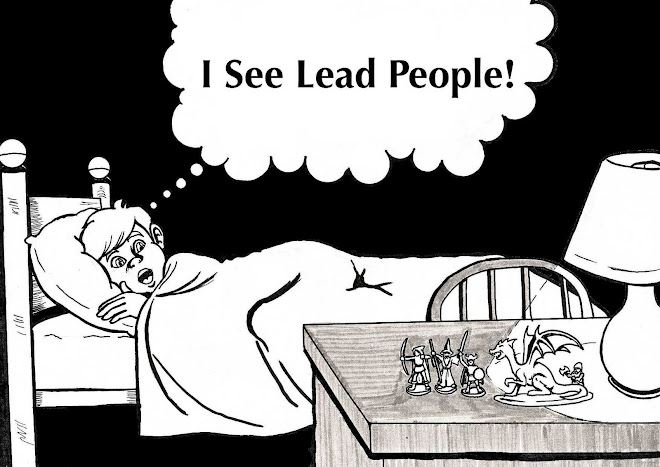

Over the decades, D&D and other fantasy games have seen the creation of countless monsters for use in games. While there are many monster that are made with specific worlds or settings in mind, most of these are designed with very broad strokes and generally fill the need for an everflowing wellspring of opponents for DMs to throw at their players. Such a generalized approach to monster design certainly succeeds in keeping players on their toes and indulging GMs in their desire to constantly surprise and vex their players, however, this also leads to many game worlds lacking definition and identity.
I have often heard that players grow tired of fighting the same monsters over and over again but I often wonder if this is a projection of GMs put upon their players based on perceived or even wholly imagined concerns. Many classic fantasy worlds are carefully curated with monsters and other foes becoming integral parts of those settings and providing a ready shorthand for the themes and character of those worlds. Tolkien's world is distinct from C.S. Lewis' and much of this has to do with the monsters that populate them. While Tolkien's world has some familiar denizens such as dragons and giants, many of them are very much unique or at least different rom others. Lewis, instead, chooses to populate his world almost exclusively and quite purposefully with classic creatures of myth and legend (including Santa Claus) and this makes both these classic fantasy realms feel distinct from one another even though they are both recognizeable as defined fantasy worlds.
 It would be easy to argue that these worlds are the products of authors crafting stories and that they are thus very different from gaming worlds. Game worlds are, afterall, made for gaming in and it makes sense that there be a desire, perhaps even a need for a steady supply of new monsters to populate adventures. True as this may be, it is also possible to regulate the flow of new monsters while maintaining a consistent caste of creature that sets the tone and feel of your world. Maintaining a steady but restrained pace when introducing new monsters will go far in establishing the character of your game world and will aid in your storytelling.
Once you have established the "normal" monsters for your world, you can focus your GMing work on how to use them and build stories including and focused around them. What's more, your players will be able to use this consistency to help engage with the world. When you send your players to a swampy region and it is established, through lore and previous encounters, that swamps are places where lizardmen can be found, the wheels will begin to turn when your players are required to go there. This doesn't mean that you should add in other swamp dwellers or that every visit to the swamps means lizardmen, but it does mean there should be an expectation that such an encounter is very likely.

Setting expectations and maintaining them as a matter of course does not mean creating a boring fantasy world. It means creating a world that lives and breathes and plays by rules and a degree of verisimilitude which you can then use to truly hightlight those things that stand out. If swamps are places where lizardment are found (to use the previous example) and the players start to find swamps devoid of lizardmen, having established the lizardmen's ubiquity should make their absence obvious to your players without you having to specifically highlight that absence. Furthermore, the lizardmen allow you a foundation to build on to the lore of your swamps and they become a vehicle for you to introduce new, but thematic enemies. When the lizardmen go to war with their neighbors, what monsters do they bring with them? Do they ride giant lizards and besiege settlements atop massive war turtles? Are they led to this conflict by a swamp hag who has it in for a local baron who has vexed her?
Setting expectations and maintaining them as a matter of course does not mean creating a boring fantasy world. It means creating a world that lives and breathes and plays by rules and a degree of verisimilitude which you can then use to truly hightlight those things that stand out. If swamps are places where lizardment are found (to use the previous example) and the players start to find swamps devoid of lizardmen, having established the lizardmen's ubiquity should make their absence obvious to your players without you having to specifically highlight that absence. Furthermore, the lizardmen allow you a foundation to build on to the lore of your swamps and they become a vehicle for you to introduce new, but thematic enemies. When the lizardmen go to war with their neighbors, what monsters do they bring with them? Do they ride giant lizards and besiege settlements atop massive war turtles? Are they led to this conflict by a swamp hag who has it in for a local baron who has vexed her?
The use and resuse of monsters is important to creating a world and while the constant flow of new monsters may be tempting, their inclusions should be done purposefully and with restraint so as not to erode the work you have done in crafting a world that players feel their characters truly live in.








 Posts
Posts


No comments:
Post a Comment